Should You Replace Modern Damp Proofing with Lime Plaster?
There is a growing trend towards removing modern damp-proofing systems and reinstating traditional lime plaster in older properties.

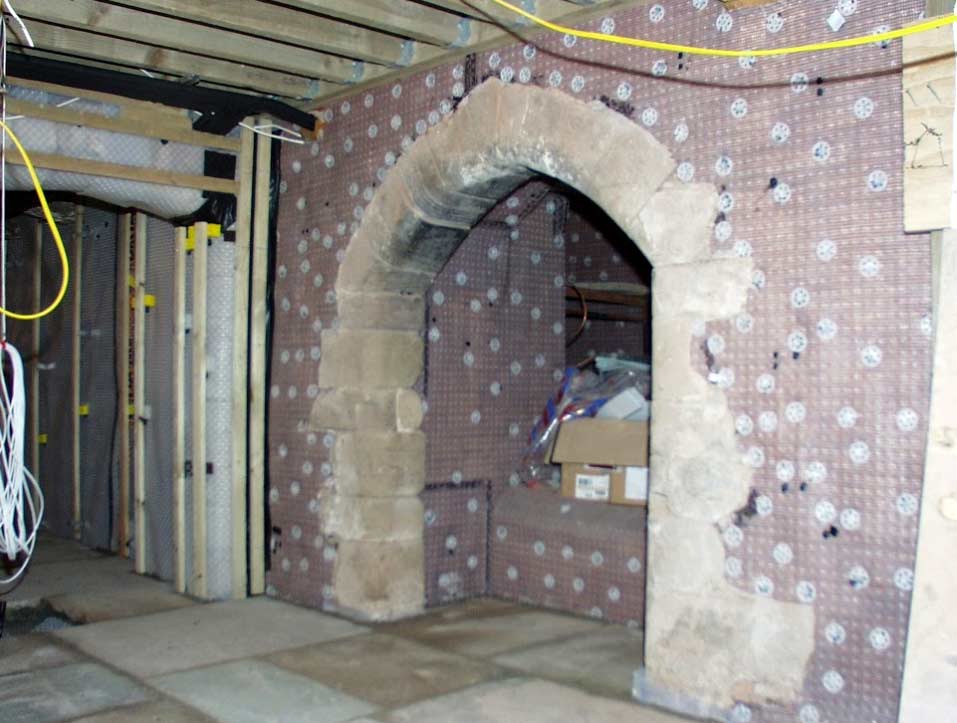

There is a growing trend towards removing modern damp-proofing systems and reinstating traditional lime plaster in older properties.
At Trace Remedial, we generally encourage traditional methods where appropriate - but only when they genuinely suit the building.
The key question isn’t “Is lime better?”
It’s “Is lime appropriate for this building in its current condition?”
Why Was Lime Plaster Used in the Past?
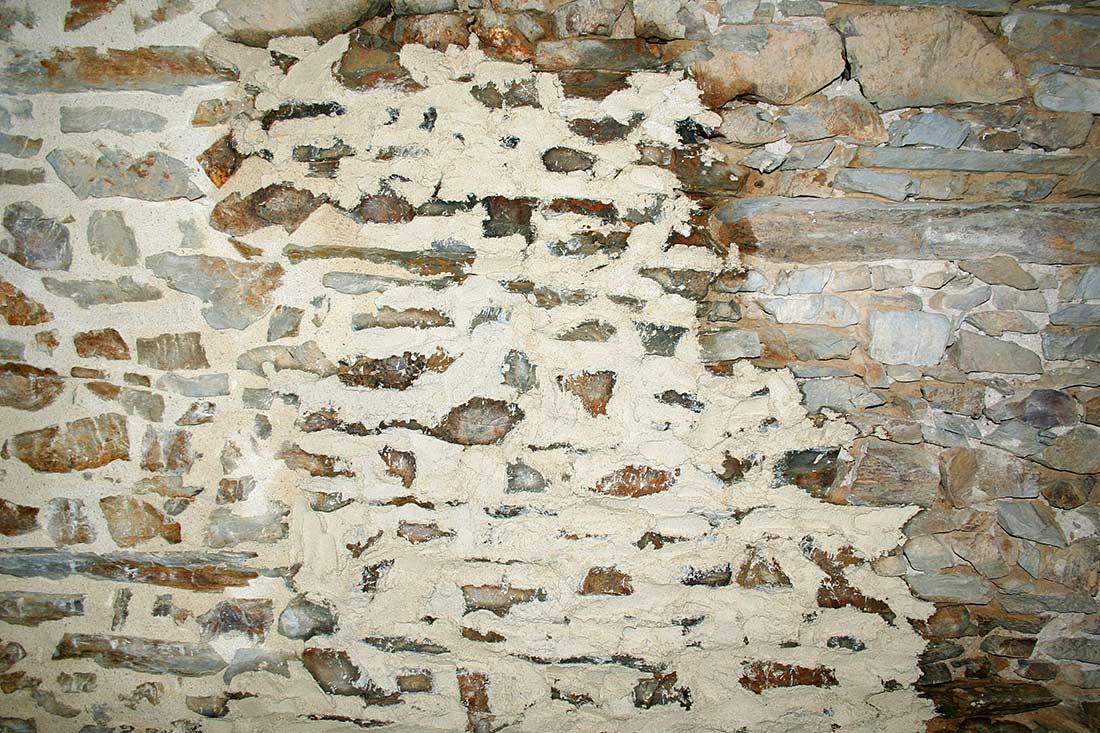
Lime plaster formed part of a complete traditional building system.
Historic buildings were typically constructed with:
- Solid masonry walls
- Lime mortar joints
- No damp proof course
- Earth, limecrete or suspended timber floors
- Open fireplaces
- Draughty doors and windows
- High levels of natural ventilation
Moisture could enter, move and evaporate freely. Lime plaster allowed walls to “breathe” - but this only worked because the entire building supported that breathability.
It was never just about the plaster.
The Modern Reality: Buildings Have Changed
Very few period properties still function as originally intended.
Over time, many have had:
- External ground levels raised
- Cement pointing applied
- Concrete slabs installed
- Subfloor ventilation reduced
- Chimneys blocked
- Double glazing fitted
- Insulation and draught sealing added
Modern living standards have significantly reduced natural airflow.
The open fires, draughty windows and unsealed floors that once helped moisture evaporate are gone. The traditional equilibrium has been altered.
Lime Plaster Does Not Cure Damp
Here’s where clarity is essential.
Lime plaster solutions do not solve a damp problem if the underlying cause has not been addressed.
Industry guidance notes clearly that:
“No amount of breathing plaster will eradicate a damp problem if the building is limited by the absence of aspects such as open fires and draughty windows and doors.”
If moisture continues to enter the wall - from high ground levels, defective drainage, bridging, or condensation - lime plaster will simply allow evaporation where possible.
It does not remove the source of moisture.
Vulnerability to Salts and Staining
There is also a misconception that lime plaster is immune to damp-related damage.
While often more tolerant than gypsum, lime mortar plaster is still likely to:
- Become damp
- Show staining
- Be affected by hygroscopic salts
If moisture persists, deterioration will still occur.
Breathability is not immunity.
Real-World Failures
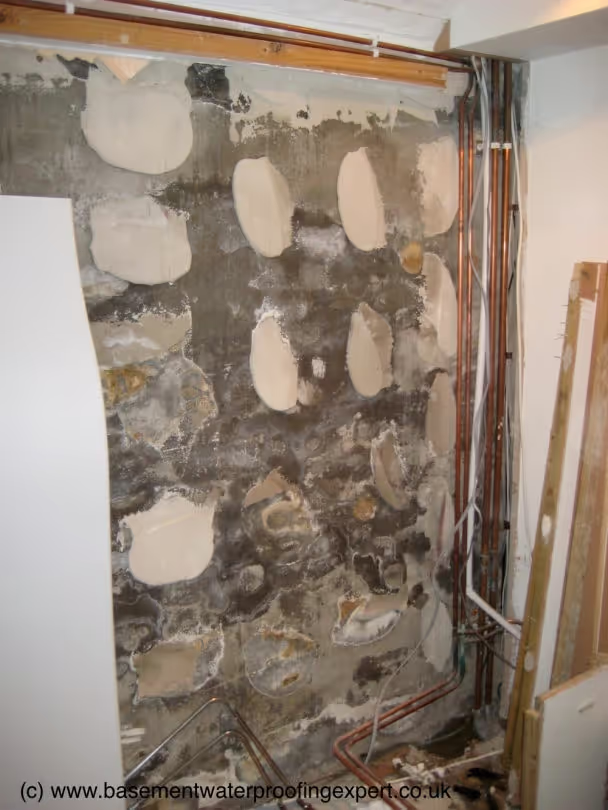
We have seen projects where lime plaster was applied to damp walls without resolving the root cause.
In some cases, walls became so damp within a short period that building works could not be completed - requiring removal and replacement with alternative systems such as ventilated plaster lath solutions.
This reinforces an important point:
Lime is not a universal remedy.
It must be part of a holistic moisture strategy.
Even Lime Manufacturers Advise Caution
Even suppliers like The Building Lime Company promote lime plasters - but specifically advise not to use them on actively damp walls.
That distinction matters.
Lime works when walls are capable of drying.
It struggles when they remain persistently wet.
Best Practice Guidance: Focus on Moisture Investigation
Guidance from professional bodies emphasises diagnosis before remedies.
The Investigation of Moisture and its Effect on Traditional Buildings (RICS guidance) - developed jointly by the Royal Institution of Chartered Surveyors (RICS), Historic England and the Property Care Association - sets out best practice for assessing moisture in traditional buildings.
Key principles of the guidance include:
- Taking a whole-building approach
- Identifying sources of moisture first
- Avoiding reliance on misleading data alone
- Providing clear, justified advice based on evidence
This professional framework supports the idea that treatment should follow diagnosis - not precede it.
When Lime Plaster Is the Right Choice
Lime plaster is often suitable where:
- The building is genuinely historic
- External defects can be resolved
- Ground levels can be corrected
- Cement pointing can be replaced with lime
- Subfloor ventilation can be reinstated
- The client is committed to restoring traditional performance
In these circumstances, lime becomes part of a whole-building approach.
When a Modern Damp Proofing System May Be More Appropriate
There are circumstances where a modern solution may be justified - but only after a thorough damp and moisture survey. At Trace Remedial, we assess the building as a system, diagnosing sources of moisture before recommending any solution.
1. The Building Cannot Be Returned to Its Original Equilibrium
Many older properties have undergone irreversible changes, such as sealed windows, removed chimneys, concrete floors, or modern insulation. If restoring traditional airflow and ventilation is impractical, lime plaster alone may not provide long-term performance. We assess whether a breathable solution is feasible or if a modern system is more appropriate, providing clear, evidence-based recommendations.
2. Feasibility of Secondary Works
For lime plaster to function properly, secondary works - like lowering ground levels, removing concrete slabs, reinstating subfloor ventilation, or repointing in lime mortar — may be required. We quantify scope, cost, and disruption in a detailed quotation, helping clients make informed decisions about traditional versus modern approaches.
3. Cost Considerations
Full traditional reinstatement can be costly. We provide comparative options with technical rationale, longevity, maintenance, and budget implications. Our experience allows us to advise on the most appropriate solution, whether traditional, modern, or a hybrid approach.
4. Existing Alterations and Building Performance
Irreversible changes, such as cement rendering, structural modifications, or retrofitted insulation, can affect moisture behaviour. Lime plaster may fail in these conditions. We assess moisture dynamics, salt presence, condensation risk, and wall build-ups to determine whether a modern system would perform more reliably.
5. Client Parameters and Regulatory Requirements
Projects operate within time, budget, and statutory constraints. In heritage or listed buildings, we liaise with conservation officers to ensure compliance. Modern systems are only specified where justified, fully documented, and installed by trained operatives, ensuring long-term performance without compromising the building’s integrity.
Why Our Approach Matters
Damp treatment is often oversimplified.
At Trace Remedial, we combine:
- Detailed moisture investigation
- Knowledge of traditional materials
- Understanding of modern damp management systems
- Experience in installation and project delivery
We do not default to one method. We assess the building, identify the moisture source, evaluate feasibility, and recommend the most appropriate long-term solution for that specific property.
Sometimes that is lime plaster as part of a traditional reinstatement.
Sometimes it is a modern damp-proofing system. Often it is a carefully considered combination.
Our responsibility is to the building - not to a particular ideology.
If you are considering using Lime Plaster for your project - you should talk to a damp proof expert at Trace Basements & Remedial. They will provide an unbiased opnion on what could be the right option for the building type.



.avif)
.avif)
.avif)


.avif)


.avif)

.avif)
.avif)

.avif)

.avif)
.avif)
.avif)


.avif)
.avif)

.avif)
.avif)